Finding the Best Journals for Writing: A Practical Guide
Over the years I have tested more notebooks than I can count. Some sat on a shelf and never got used. Others became daily companions I still reach for. The difference often comes down to small things: how the paper handles ink, how the binding lays flat, whether the size fits your pocket or your desk. After decades of writing, I have settled on a handful of notebooks that I consider the best journals for writing. Not because they are expensive or trendy, but because they work.
Paper quality matters more than any other feature. If the paper feathers or bleeds, the experience falls apart. If it feels too slick or too rough, you lose momentum. I have learned to look for notebooks that use fountain-pen-friendly paper with a weight around 90 gsm or higher. That alone eliminates many options. Among the notebooks that pass the paper test, a few stand out for their consistency and feel.
What Makes a Notebook Worth Using
Before I get into specific brands, let me share what I look for. First, the paper must handle ink without ghosting or bleeding. Second, the binding should allow the notebook to open flat. Third, the cover needs to protect the pages during daily carry. Fourth, the ruling should suit your writing style. Fifth, the size should fit your bag or your hand. These criteria sound simple, but many notebooks fail on one or more.
Hardcover notebooks offer more protection and a solid writing surface. Softcover ones are lighter and more flexible. Lay-flat binding is a must if you write near the edges. Page count matters too: a notebook that is too thick becomes unwieldy, while one that is too thin runs out before you build a habit. I prefer between 80 and 200 pages for a standard notebook.
Notebooks That Consistently Deliver
Leuchtturm1917
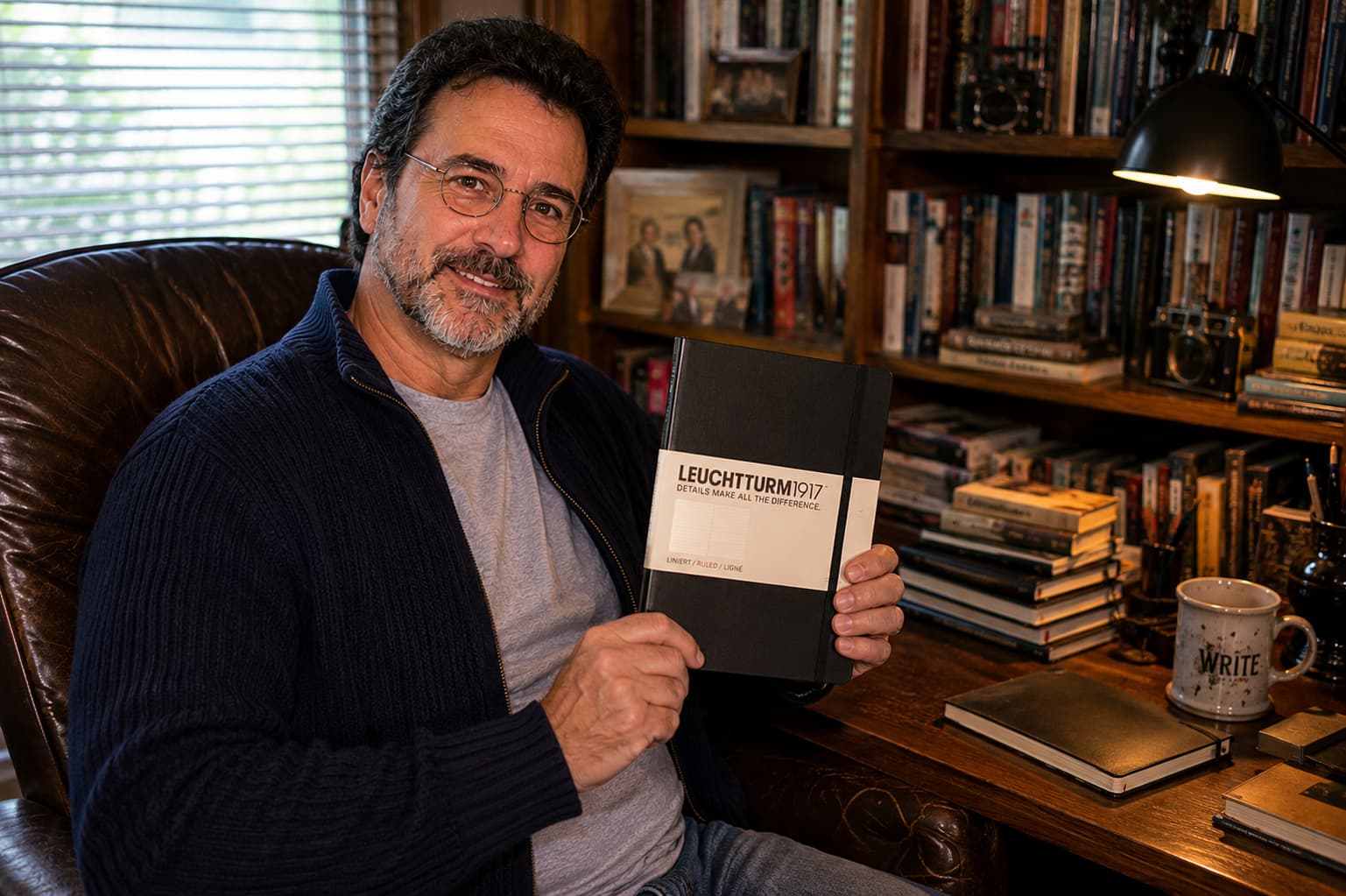
Leuchtturm1917 is one of the most popular brands among serious writers. Its 90 gsm paper holds up well to most pens, and the numbered pages make it easy to keep a table of contents. The notebook comes in a range of sizes and colors. I have used the A5 size for years. The only downside is that the paper is not as fountain-pen-friendly as some alternatives. With a wet nib you might see some ghosting. But for ballpoints, gel pens, and fine fountain pens, it works beautifully.
Rhodia and Clairefontaine
Rhodia and Clairefontaine come from the same parent company and share a similar paper stock. Rhodia uses a coated paper that is smooth and bright white. It handles fountain pens exceptionally well. Clairefontaine offers a slightly different feel, with a bit more tooth. Both brands make spiral-bound and staple-bound notebooks that lie flat. I keep a Rhodia No. 16 pad on my desk for quick notes. If you write with fountain pens, these are among the best journals for writing you can buy.
Moleskine
Moleskine is the brand that many people think of first. Its classic design and cultural cachet are hard to ignore. But the paper quality has declined over the years. The 70 gsm paper shows more ghosting than I would like, and it does not handle fountain pens well. That said, if you use a ballpoint or a pencil, a Moleskine still feels wonderful in the hand. The elastic closure band and back pocket add convenience. I still use them for travel journals because of their durability and size options.
Field Notes
Field Notes makes pocket-sized notebooks that are perfect for jotting down ideas on the go. The paper is not the best for fountain pens, but it works well with ballpoints and pencils. The covers are sturdy and come in many limited-edition designs. I carry a Field Notes memo book in my back pocket almost everywhere. It is not a notebook for long writing sessions, but it is excellent for capturing quick thoughts.
Baron Fig
Baron Fig produces notebooks with a minimalist aesthetic and high-quality paper. Their Confidant model uses 100 gsm paper that handles most pens without bleeding. The dot grid ruling is my favorite for its flexibility. The notebook opens flat and stays open. The cover is soft and feels nice to the touch. I have used a Baron Fig Confidant as my daily journal and found it reliable. The only drawback is that the paper is slightly cream-colored, which some people dislike.
Midori MD Notebook
Midori MD Notebooks are made by a Japanese brand known for its simple, functional design. The paper is 80 gsm and has a smooth, slightly textured surface that works well with fountain pens. The notebook comes in A5 and A6 sizes, with a soft cover that ages beautifully. I have written hundreds of pages in a Midori MD and never had a problem with feathering or bleed-through. The binding is thread-stitched and lays flat. If you want a no-fuss notebook that just works, this is a strong choice.
Hobonichi Techo
Hobonichi Techo is a Japanese planner that uses Tomoe River paper. That paper is famously thin but surprisingly resistant to bleeding and ghosting. The notebook is designed for daily planning, but many writers use it as a journal because of the high page count and the paper quality. The size is smaller than A5, which makes it easy to carry. The paper does show some ghosting if you write heavily, but it holds up to fountain pens better than most.
Traveler's Notebook
Traveler's Notebook is a system that uses a leather cover and replaceable inserts. You can buy inserts with different rulings and paper types. The paper is generally good, though not as high-quality as Midori or Rhodia. The appeal lies in the customization: you can carry multiple inserts for different purposes. I use a Traveler's Notebook for my daily logs and separate inserts for project notes. The leather cover develops a patina over time, which adds character.
Other Notable Notebooks
Stalogy makes notebooks with ultra-smooth paper that works well with fountain pens. The A5 B5 size is my favorite. The paper is 80 gsm and feels slightly waxy. Mnemosyne notebooks from Maruman use a unique paper that is very smooth and resists bleeding. They come in many sizes and have a simple, professional look. Exceed notebooks are a budget option sold at Walmart. They use 100 gsm paper that performs well for the price. I have used them for scratch notes and they hold up fine.
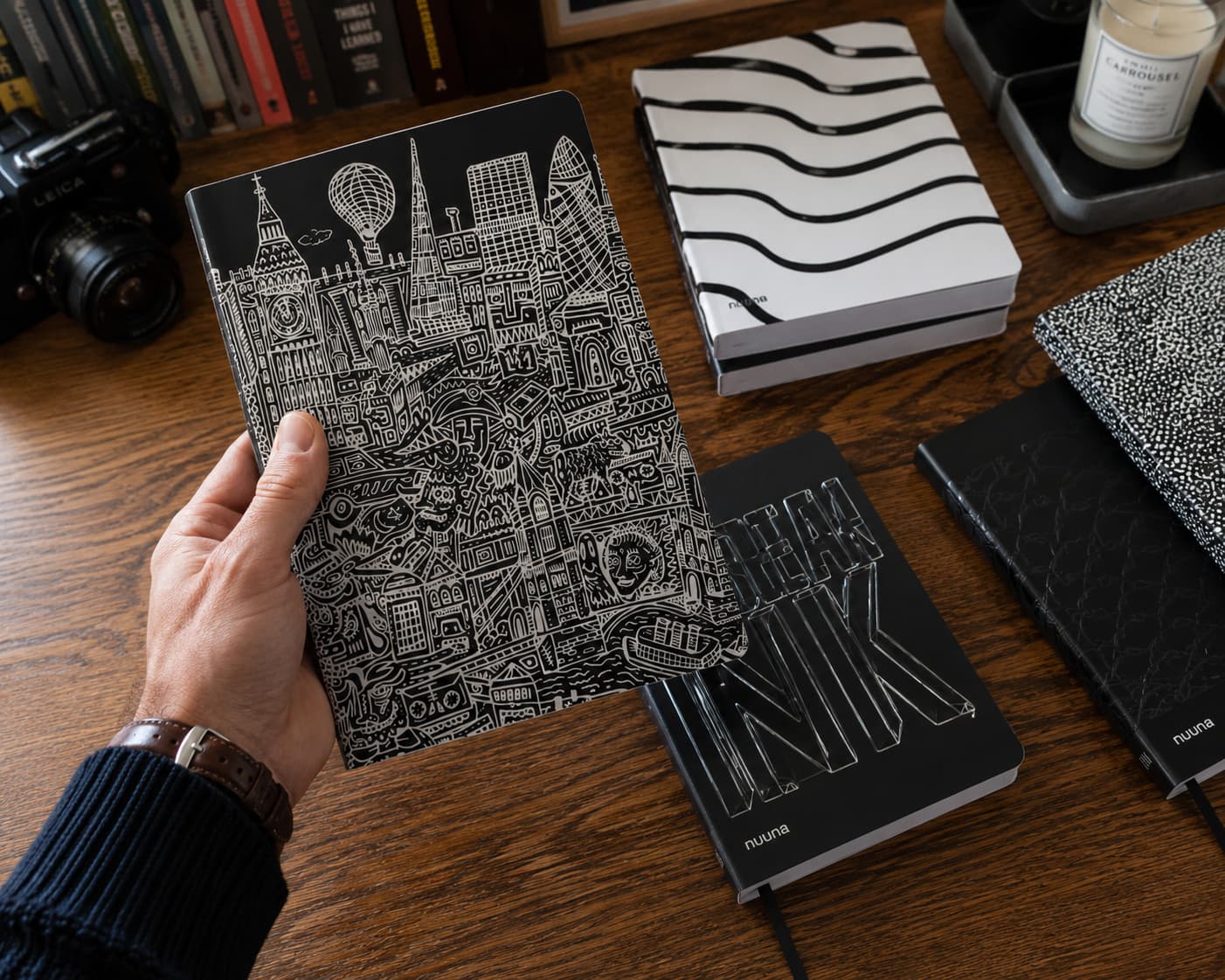
Dingbats notebooks are made with vegan leather covers and 100 gsm paper. They come with a pen loop and an elastic closure. The paper handles fountain pens well. Archer and Olive makes notebooks with thick 160 gsm paper that can handle almost any medium. They are popular among artists and bullet journalists. The paper is so thick that you lose some pages, but you never have to worry about bleed-through. Smythson is a luxury brand that makes leather-bound notebooks with very thin, smooth paper. They are expensive and the paper is not ideal for fountain pens, but the craftsmanship is superb. Peter Pauper Press produces affordable notebooks with good paper. Nuuna notebooks have a distinctive minimalistic design with colorful covers and 100 gsm paper. Essentials Notebook from Michael Roger Press is a budget option with 80 gsm paper. Minimalism Art makes notebooks with a clean design and good paper for the price.
How to Choose Your Notebook
Start by thinking about how you write. If you use fountain pens, prioritize notebooks with coated or high-quality paper like Rhodia, Clairefontaine, or Midori. If you write with ballpoints or pencils, you have more freedom and can consider brands like Moleskine or Field Notes. Think about size: A5 is a good all-around size for desk and travel. Pocket-sized notebooks are better for capturing ideas on the go. Consider ruling: dot grid offers the most flexibility, followed by plain and lined. Hardcover notebooks provide more protection, while softcover ones are lighter.

I recommend buying one notebook at a time and using it until you understand its strengths and weaknesses. Do not buy a stack of notebooks just because they are on sale. Each notebook has a personality, and you need to see how it fits your life. After using many notebooks, I have come to believe that the best journals for writing are the ones that make you want to write. The paper, binding, and design all contribute to that feeling. But in the end, the notebook that gets used is the one that matters.
Final Thoughts
There is no single best notebook for everyone. The right choice depends on your tools, your habits, and your preferences. I have gone through periods where I used only Leuchtturm1917 and periods where I used only Midori. Both served me well. The key is to find a notebook that disappears in your hands, one that lets you focus on the words instead of the paper. That is the mark of a great notebook. And if you keep trying, you will find yours.